
Asian Haircuts in Brooklyn
Finding a Haircut That Works With Your Hair — and Your Features
Finding the right haircut can be frustrating when the stylist understands the look you want but doesn’t fully understand how your hair behaves. Many clients come to the salon looking for a particular cut — Korean layers, a Korean bob, a two-block, a Japanese shag, a hime cut, curtain bangs, a wolf cut — and discover that the same haircut can look very different depending on hair texture, density, growth pattern, face shape, and styling habits.
At Seoul Scissors, Nicole has more than 25 years of professional experience and specializes in Korean- and Japanese-inspired hair design. The goal is to adapt the haircut to your hair, your face, and the way you want to wear it.
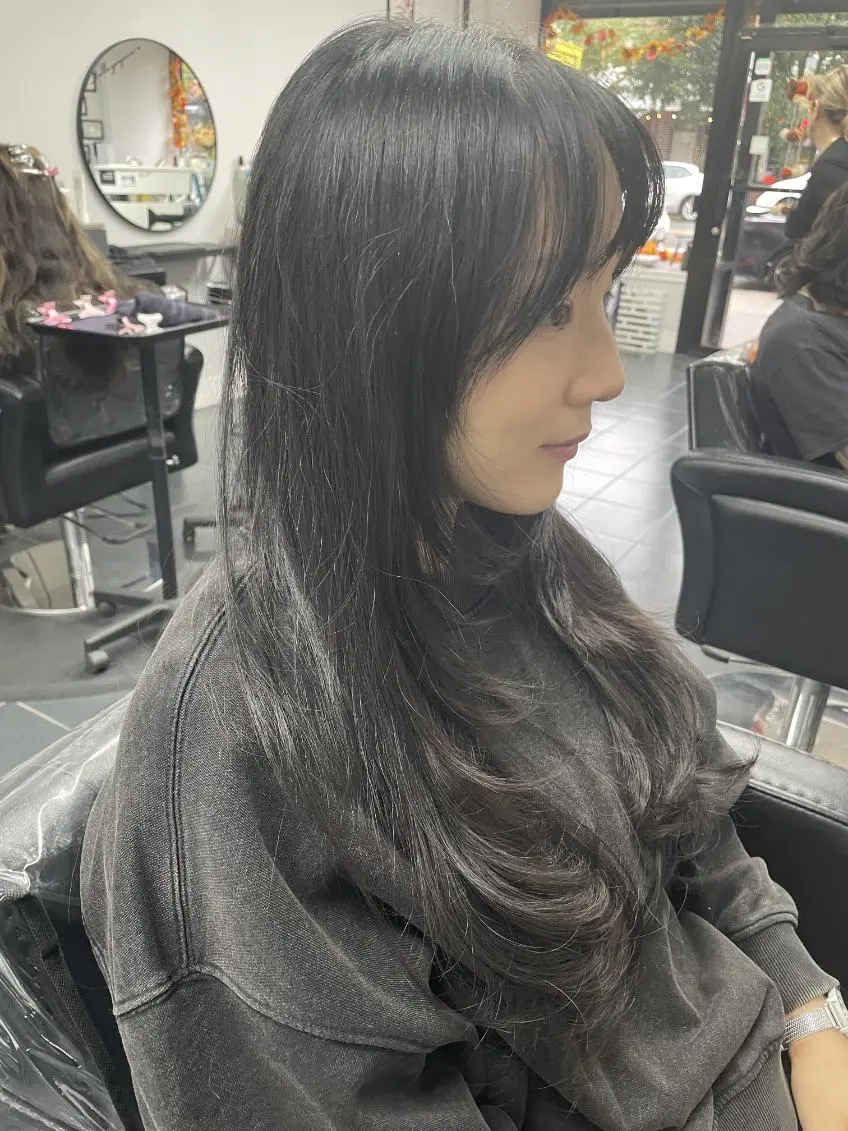
Why Can Asian Hair Be Challenging to Cut?
There is no single definition of “Asian hair.” Hair varies enormously from person to person in thickness, density, texture, straightness, wave or curl, coarseness, individual strand diameter, growth pattern, natural volume, hairline, cowlicks, and previous chemical processing.
Still, some clients with straighter or denser hair find that a haircut behaves differently than expected when cut by someone unfamiliar with that type of hair. For example, hair with substantial density may require careful consideration of where weight is removed and where it is retained — simply thinning everything out is not necessarily the answer. Likewise, a layered haircut designed for one texture may not produce the same movement on another. The haircut needs to be engineered around the individual.
The Problem Isn’t “Asian Hair”
The problem is often a mismatch between the haircut and the hair. A photograph might show beautiful movement, but your hair may have more density, less natural wave, a different hairline, a different growth direction, different thickness, different length, or different face proportions.
That doesn’t mean you can’t have the style. It means the style may need to be adapted. This is where an experienced consultation becomes important.
What Makes Korean & Japanese Haircuts Different?
Korean and Japanese-inspired haircuts often place significant emphasis on:
- Shape
- Layer placement
- Face framing
- Movement
- Controlled texture
- Bangs
- Weight distribution
- Natural-looking styling
- The relationship between the haircut and the face
The finished result can be subtle rather than dramatic. A few centimeters of difference around the face can completely change how a haircut looks. That is why copying the name of a haircut is not enough — the details of the cut matter.
For a closer look at the Korean side of this, see my complete guide to Korean hairstyles for women and men.
Which Asian-Inspired Haircut Is Right for Your Face?
Your face shape is one consideration — but it shouldn’t be the only one. Your actual features, hair density, hairline, forehead, cheekbones, jawline, and preferred amount of maintenance all matter. Here are some common styles and the visual features they can emphasize:
- Korean Layered HaircutKorean-inspired layers can create movement without necessarily sacrificing a lot of length. Can emphasize: cheekbones, eyes, jawline, natural facial proportions. The placement of the shortest layer is especially important — layers that begin too high can create more volume than intended, while layers that begin lower create softer movement through the lengths. Explore the Korean Layered Haircut →
- Korean BobCustomizable from sleek and structured to softer and more textured. Can emphasize: jawline, neck, cheekbones, eyes. A shorter bob creates a stronger facial frame, while a longer bob or lob provides a softer transition.
- Korean Pixie BobCombines the lightness of a shorter haircut with the shape and softness associated with a bob. Can emphasize: eyes, cheekbones, jawline, neckline — particularly effective when the goal is a short haircut that still feels feminine and polished.
- Curtain Bangs + LayersCurtain bangs can create a frame around the upper portion of the face while blending into longer layers. Can emphasize: eyes, cheekbones, brow area. Length and separation can be adjusted according to forehead height, face proportions, and how much framing you want.
- See-Through BangsLight, airy bangs are a recognizable Korean-inspired option. Can emphasize: eyes, brows, upper face — facial framing without the heavier appearance of a full blunt fringe.
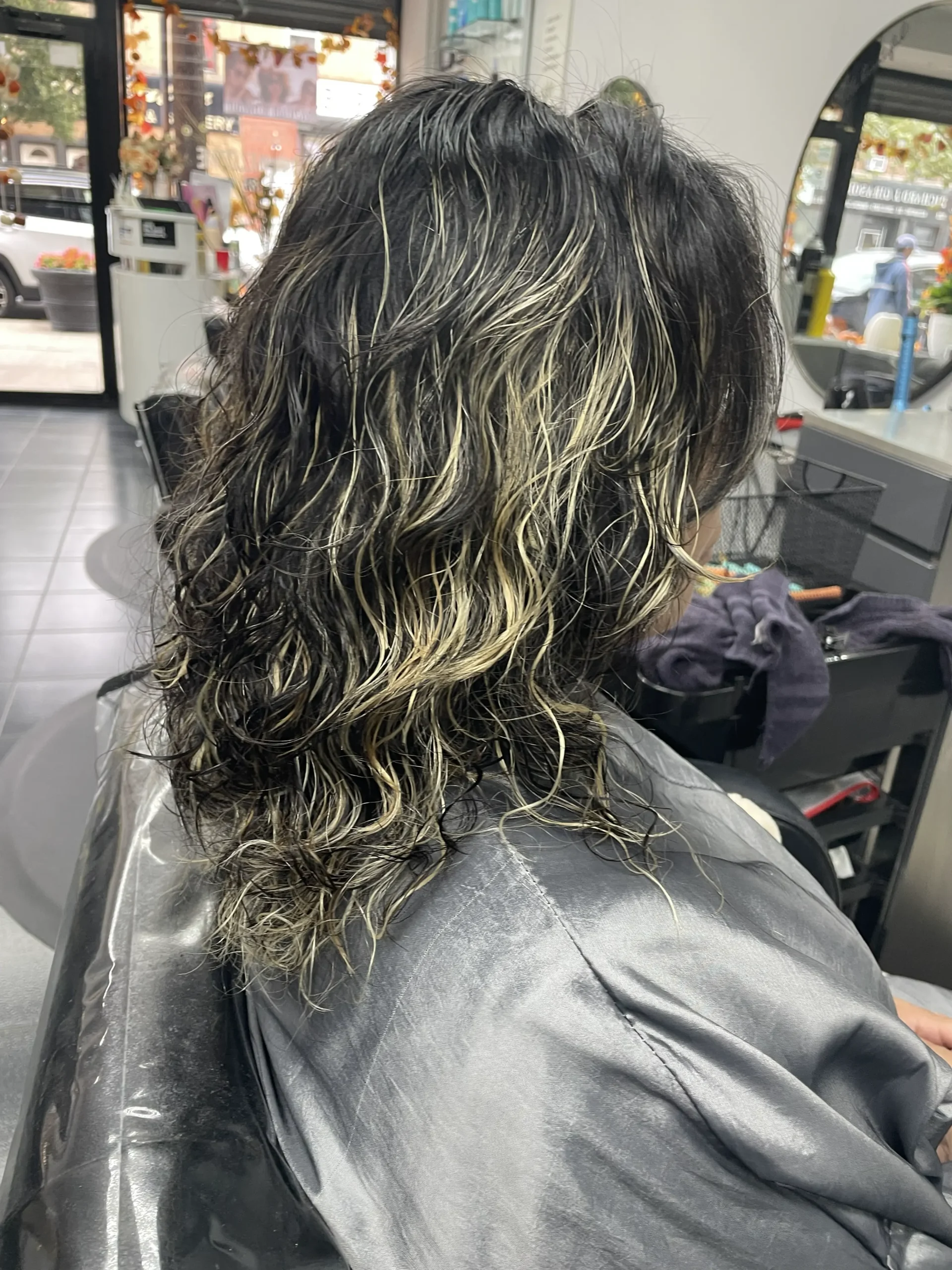
- Wolf CutCombines shorter layers and more length to create movement and texture. Can emphasize: cheekbones, eyes, jawline, overall facial structure. On dense or very straight hair, the amount of layering and internal weight removal can be particularly important. Explore the Wolf Cut →
- Hime CutCreates a distinctive contrast between shorter face-framing sections and longer hair. Can emphasize: jawline, cheekbones, side profile, eyes. Because the face-framing sections are a defining feature, their length should be chosen carefully.
- Hime-Inspired LobA softer interpretation combining face-framing sections with a shorter overall length. Can emphasize: cheekbones, jawline, neck, side profile — the visual character of a hime cut without committing to very long hair.
- Japanese ShagCreates softer, more natural movement through the hair. Can emphasize: cheekbones, eyes, jawline, natural texture — and can be adapted to different lengths rather than being tied to one exact shape. Explore the Shaggy Cut →
- Japanese-Inspired BobOften emphasizes clean shape, controlled movement, and proportion. Can emphasize: jawline, neck, cheekbones, overall facial structure. The right length can make the difference between a sharp, graphic bob and a softer, more relaxed version.
Face Shape Is a Starting Point — Not a Rulebook
You will often hear that a particular haircut is “for round faces” or “for square faces.” Real people are more complicated than that. Most faces combine several characteristics — a strong jawline with softer cheeks, a wider forehead with a narrower chin, high cheekbones with a longer face, a rounder lower face with an angular jaw, or features that don’t fit neatly into one category.
So instead of asking only “What is my face shape?” — a better question is:
“What features do I want my haircut to highlight?”
Maybe you want your eyes to stand out. Maybe you want to emphasize your cheekbones, softer framing around your jaw, or a longer-looking face. Maybe you simply want a modern haircut that feels balanced. The haircut can be designed around that goal.
Hair Density Changes the Haircut
Density is one of the most overlooked parts of getting the right haircut. Two people can have the same length and similar-looking hair but require completely different cutting strategies.
Very Dense Hair
The goal may be to create movement and remove unnecessary weight without making the ends look thin.
Fine Hair
The goal may be to preserve weight and fullness rather than removing too much.
Thick, Straight Hair
Layer placement and internal weight can determine whether the haircut moves naturally or sits heavily.
Previously Processed Hair
Color, bleach, perms, and straightening can change how the hair behaves and what can safely be done next.
The solution is not automatically “more layers.” It is the right amount of weight removal in the right places.
Why the Hairline Matters
Your hairline and natural growth patterns can influence how a haircut behaves. Cowlicks, directional growth, temples, the crown, and areas of naturally greater density can all affect the final shape. A photograph doesn’t show those things — your stylist needs to see them in person. This is another reason why a good haircut should not simply be copied from an image.
Korean & Japanese Cuts for Men
Asian-inspired men’s haircuts can be particularly detail-oriented. Nicole offers styles including:
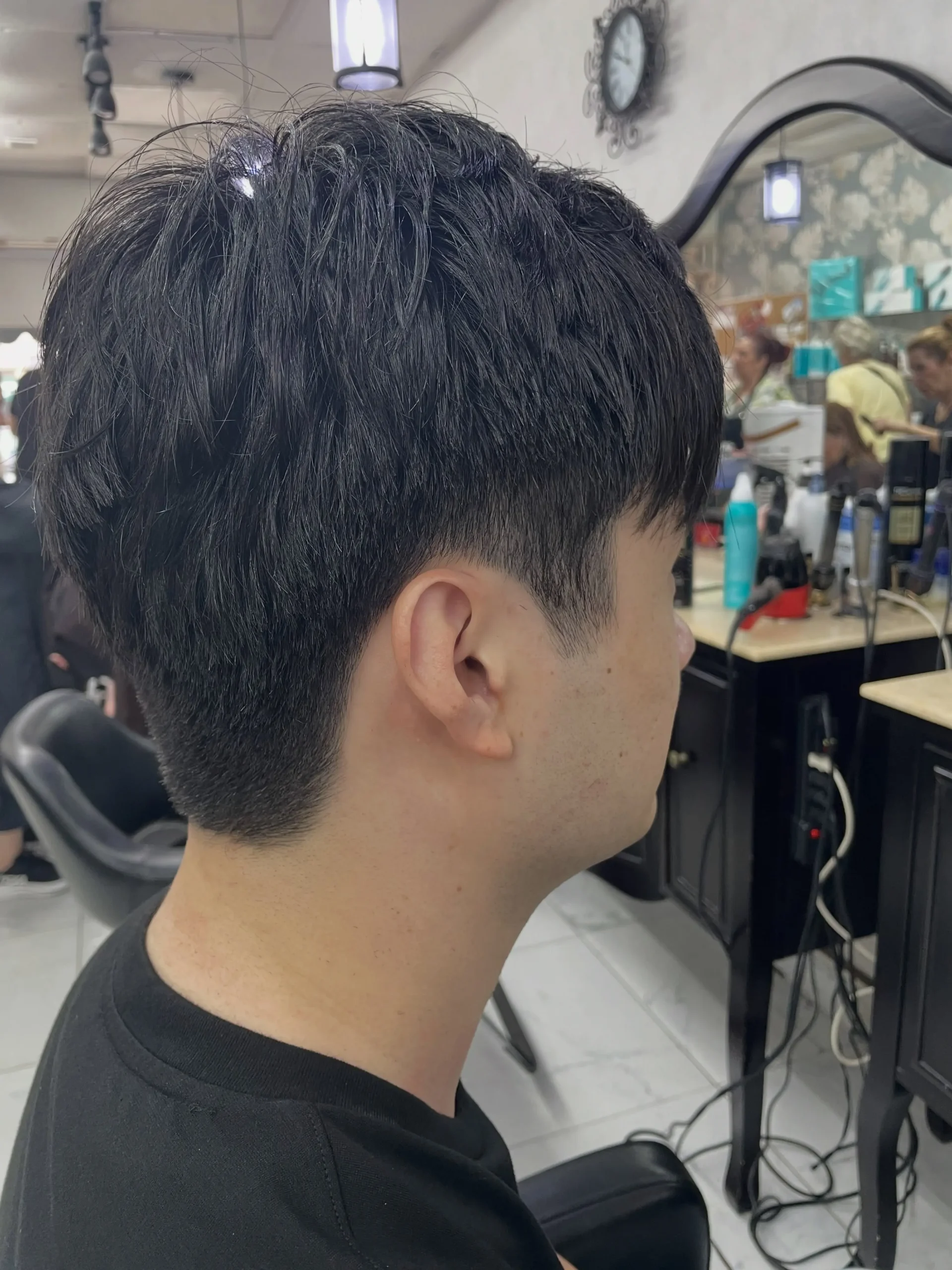
- Two-block cuts
- Korean-inspired layered cuts
- Dandy cuts
- Comma hair
- Textured fringe
- Soft layered cuts
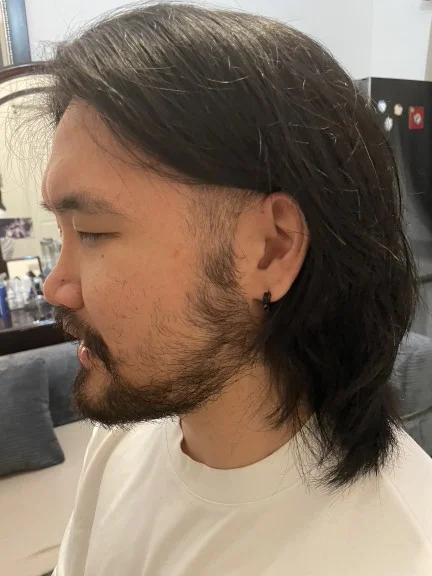
- Korean mullets
- Neo-quiffs
- Side-part styles
- Japanese crops
- Japanese shaggy cuts
- Japanese-inspired longer styles
Asian Hair & Women’s Haircuts
For women, Korean and Japanese-inspired cuts can range from very subtle to highly recognizable. You may want:
- Long Korean layers
- Curtain bangs
- Korean bob
- Butterfly cut
- Wolf cut
- Hime cut
- Japanese shag
- Layered lob
- Face-framing layers
- See-through bangs
- Blunt or textured bob
You don’t have to choose a haircut simply because it is labeled “Korean” or “Japanese.” The more useful question is: does this particular shape work with your hair and your features? Nicole can help translate the look you like into a version that works for you.
Straight or Thick? Both Are Assets
What If My Hair Is Very Straight?
Straight hair can be incredibly versatile — it shows clean lines, precise shapes, layers, bangs, and face-framing very clearly. But very straight hair can also make unevenness or poor weight distribution more obvious, which makes precision important. A haircut that relies on texture from naturally wavy hair may need to be modified when performed on very straight hair.
What If My Hair Is Thick or Dense?
Thick hair can create beautiful volume and structure, but it can also become heavy if the haircut doesn’t account for the amount of hair. The goal isn’t necessarily to make thick hair thin — it is to create a shape where the weight is controlled, through strategic layering, internal weight management, and careful shaping rather than simply using thinning shears everywhere.
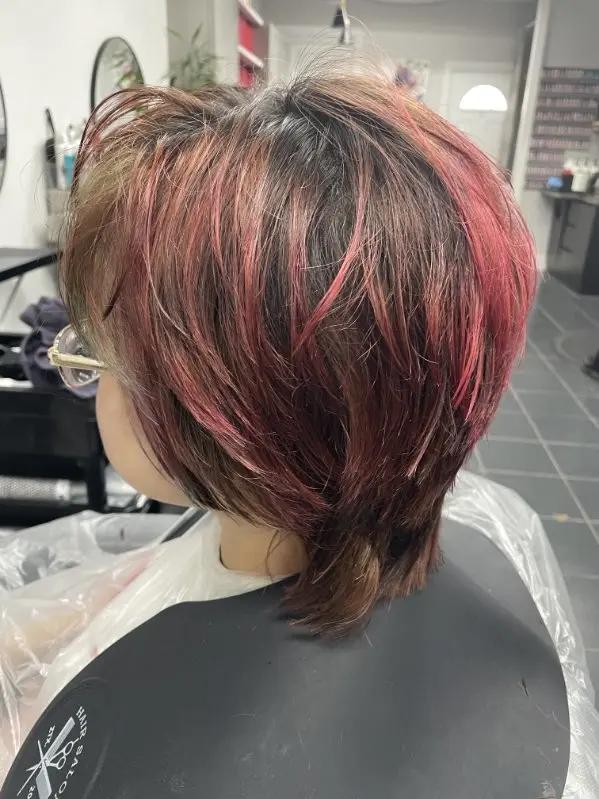
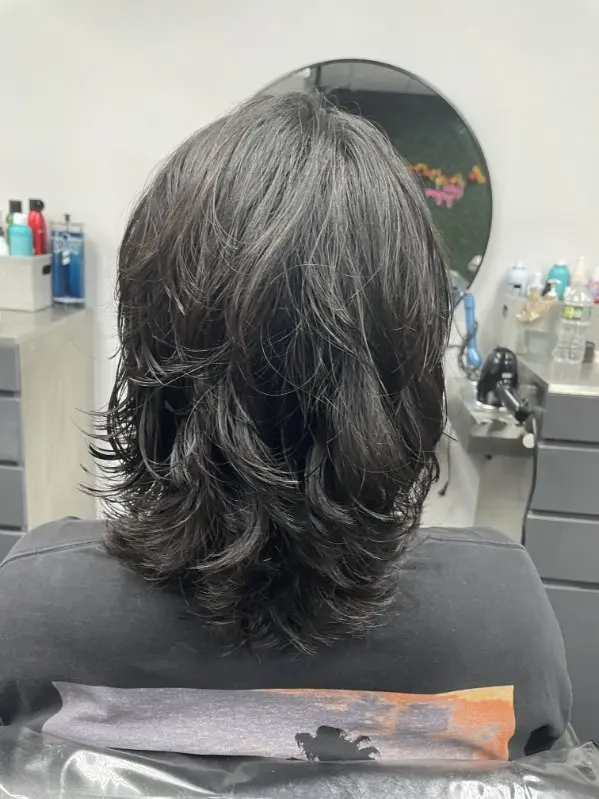
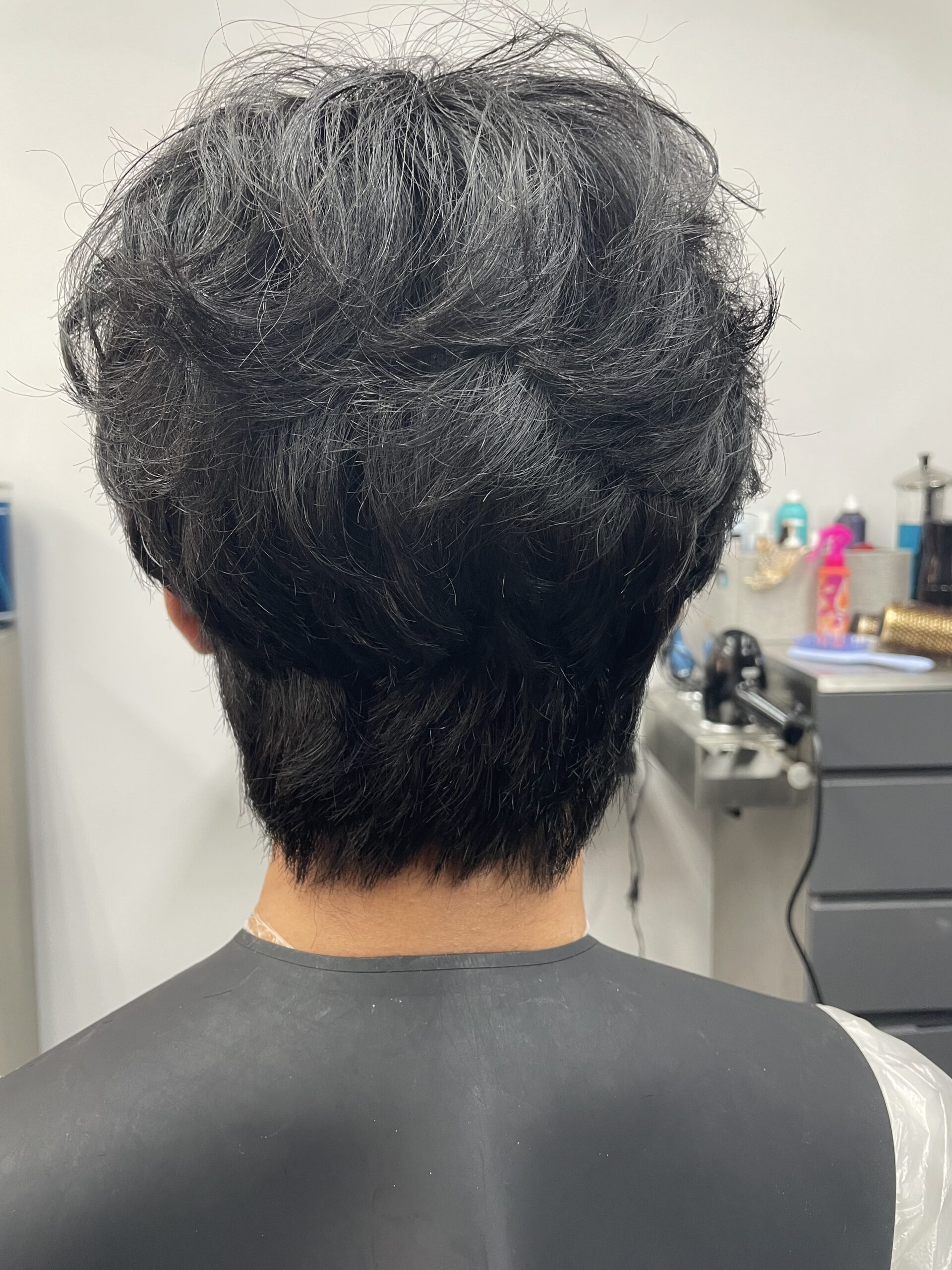
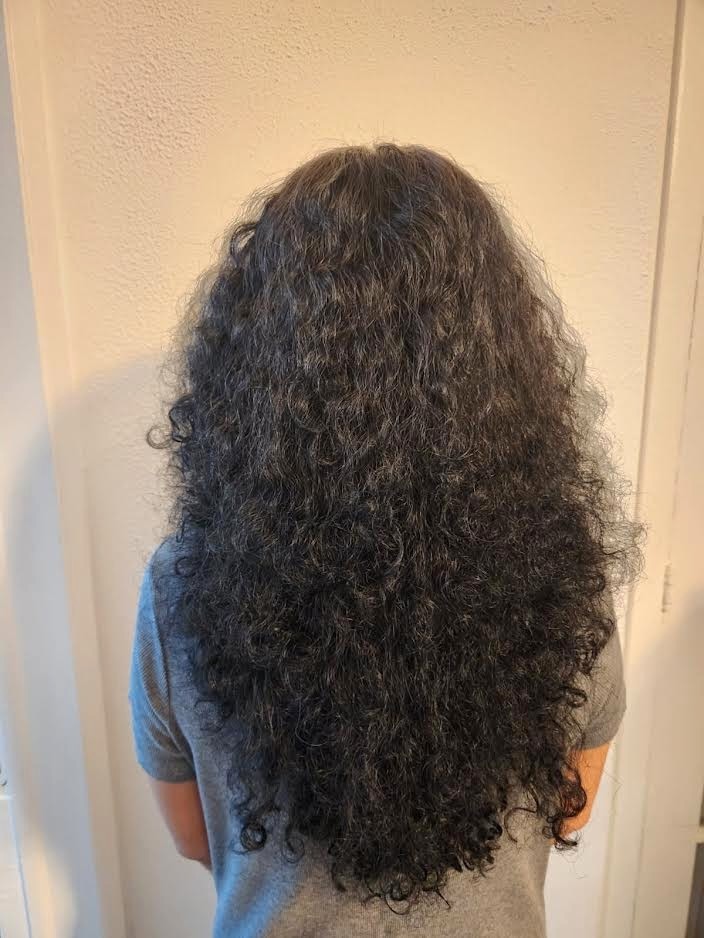
Recent Korean & Japanese-Inspired Work

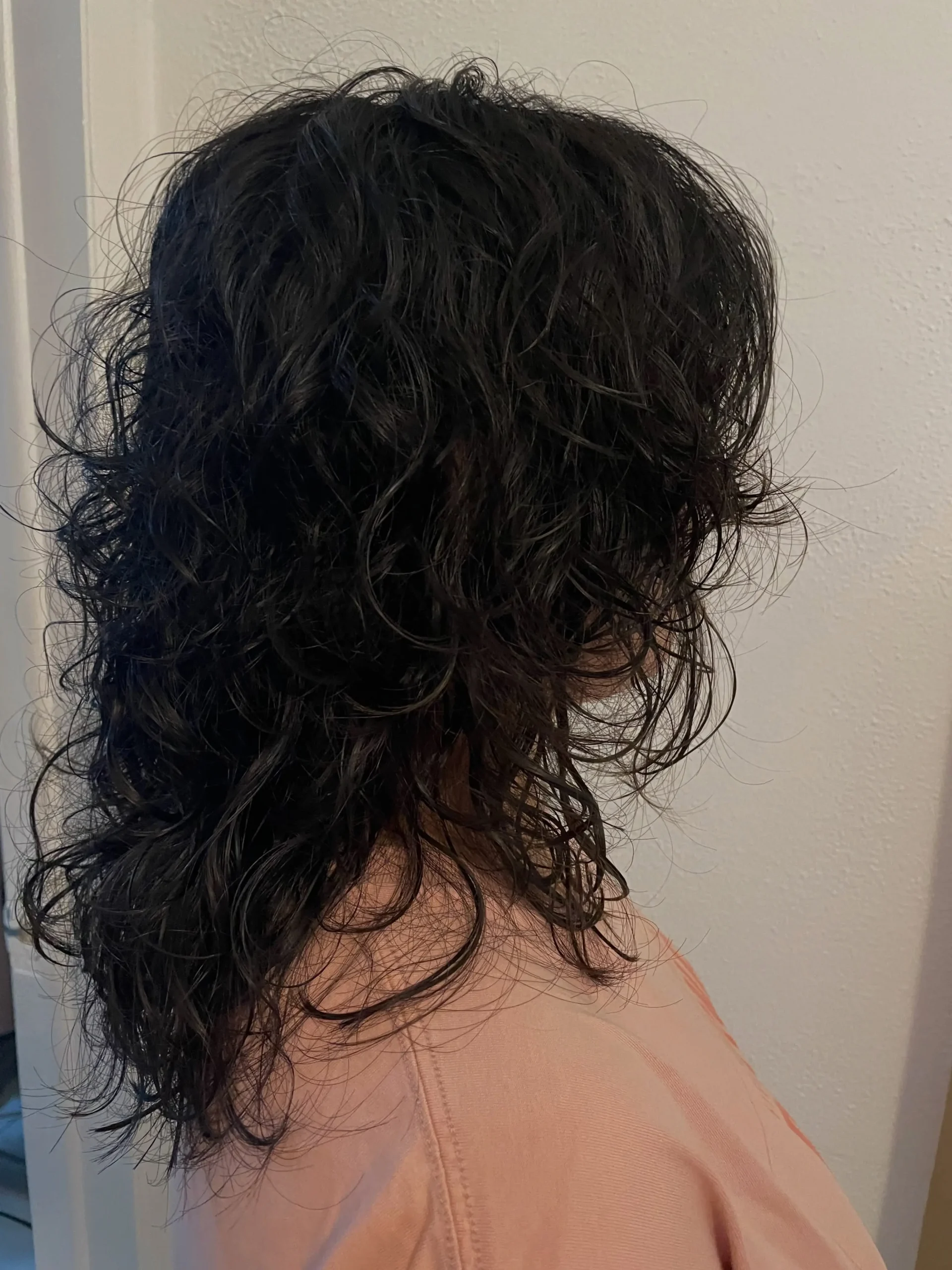
Korean or Japanese Haircuts Without Looking “Too Trendy”
Absolutely. Not every client wants an obvious K-pop or Japanese street-style haircut. The influence can be subtle:
- Softer face framing
- More natural layers
- A modern bob shape
- Airy bangs
- Controlled movement
- A more polished silhouette
- Japanese-inspired shaggy texture
- Korean-inspired long layers
You can borrow the technique and design philosophy without copying an extreme trend.
Bring a Picture — But Don’t Expect an Exact Copy
Reference photographs are extremely helpful. They show:
- The overall shape
- Length
- Layer placement
- Bangs
- Texture
- Styling direction
But your hair is not the model’s hair. Your face is not the model’s face. Your density, hairline, and previous chemical history may be completely different. The objective is to use the photograph as a starting point and create your version of the look.
Korean & Japanese Hair Services Beyond Haircuts
The right haircut is only part of the equation. Seoul Scissors also offers Korean- and Japanese-inspired services including:
- Korean Digital Perm
- Japanese Hair Straightening
- Volume Magic Perm
- Iron Perm
- Two-Block Haircuts
- Korean and Japanese-inspired styling
- Hair color and vivid color services
If your goal involves changing both the shape and texture of your hair, consultation becomes even more important.
Finding the Right Stylist for Asian Hair
If you’ve ever had the experience of showing a stylist a photograph and getting something that looked completely different on your own hair, you know how frustrating that can be. The issue isn’t necessarily that the stylist is bad — they may simply be accustomed to working with different hair characteristics or different cutting techniques.
When choosing a stylist for Asian-inspired hair, look for someone who can discuss:
- Your actual hair texture
- Density and hairline
- Face shape and features
- The reference style
- How you normally wear your hair
- How much styling you want to do
- Your previous chemical services
- What the haircut will look like after it grows out
That’s the conversation that turns a photograph into a haircut that belongs to you.
Why Clients Choose Seoul Scissors for Asian-Inspired Hair
Nicole combines more than 25 years of professional hair experience with a particular understanding of Korean- and Japanese-inspired hair design. But the goal isn’t to put every client into the same category. It is to understand your individual hair and then use the techniques and design ideas that make sense for you.
Whether you’re looking for a Korean layered haircut, Japanese shag, hime cut, Korean bob, curtain bangs, two-block haircut, or something more subtle, the service begins with understanding what you want and how your hair behaves.
“You don’t have to settle for a haircut that was designed for someone else’s hair.”
Frequently Asked Questions
Does Nicole specialize in Asian hair?
Nicole has extensive experience with Korean- and Japanese-inspired haircuts and styling, along with more than 25 years of professional experience working with a wide range of hair types and clients.
Is all Asian hair the same?
No. Asian hair varies significantly in texture, density, thickness, straightness, wave pattern, and other characteristics. A good haircut should be based on the individual’s hair rather than assuming everyone has the same type.
What haircut is best for Asian hair?
There is no single best haircut. The right choice depends on your hair characteristics, face, desired style, length, and maintenance preferences.
What Asian haircut is best for a round face?
There isn’t one universal answer. Longer layers, strategic face framing, and certain bang placements can create different visual effects, but the final choice should account for your actual features and hair.
What Asian haircut works well for thick hair?
Layering and strategic weight management can help thick hair move more naturally. The exact approach depends on density, texture, length, and desired style.
Can Nicole recreate a Korean hairstyle from a picture?
A reference photograph is a useful starting point. Nicole can evaluate the haircut’s shape and adapt it to your own hair, face, density, and styling routine.
Can I get a Korean haircut without looking like I’m following a trend?
Yes. Korean- and Japanese-inspired techniques can be incorporated subtly into a modern haircut.
Does this service include men?
Yes. Seoul Scissors offers Korean- and Japanese-inspired men’s haircuts including two-block, dandy, comma, textured, layered, shaggy, and other styles.
Do I have to be Asian to get these haircuts?
No. Korean- and Japanese-inspired hair design is available to anyone who likes the style. The haircut is adapted to the individual’s hair and features.
Asian Haircuts in Dyker Heights, Brooklyn
Seoul Scissors provides personalized women’s and men’s haircuts, Korean and Japanese-inspired hair design, and specialized perm services in Brooklyn. I am located inside Hair by Fendi at 7513 13th Ave in Dyker Heights, minutes from Bay Ridge — read more about my Korean & Japanese hair services near Bay Ridge or my Korean & Japanese hair services in Brooklyn. Street and metered parking are nearby. By appointment only, no walk-ins.